Wednesday, September 2, 2015

Rhetorical Theory and Visual Rhetoric PhD Preliminary Exam List

In October, I'll be taking PhD Preliminary Exams. So, just for fun, here's one of my lists, called Rhetorical Theory and Visual Rhetoric, in a rough chronological order. There's also a note at the bottom that explains some of the sources.

Gorgias, “Encomium of Helen” (ca. 414 B.C.E.)

Isocrates, Against the Sophists (ca. 390 B.C.E.)

Plato, Gorgias (ca. 386 B.C.E.)

Plato, Phaedrus (ca. 370 B.C.E.)

Aristotle, On Rhetoric (Aristotle taught a course in rhetoric in ca. 358 [Rhetorical Tradition 169]. The exact date of the Rhetoric is not known or disputed.).

Isocrates, Antidosis (ca. 353 B.C.E.)

Cicero, De Oratore (55 B.C.E.)

Quintilian, Institutio Oratoria. Selections from books 2, 6, 10, 11, and 12. (95 A.D.)

Kenneth Burke, Counter-Statement (1931)

Kenneth Burke, Permanence and Change (1935)

Kenneth Burke, Attitudes Toward History (1937)

Kenneth Burke, “The Rhetoric of Hitler’s ‘Battle’” (1939)

Kenneth Burke, Philosophy of Literary Form (1941)

Kenneth Burke, A Grammar of Motives (1945)

Kenneth Burke, A Rhetoric of Motives (1950)

Chaim Perelman and Lucie Olbrechts‐Tyteca, The New Rhetoric: A Treatise on Argumentation (1958)

Kenneth Burke, A Rhetoric of Religion (1961)

Gui Bonsiepe. “Visual/Verbal Rhetoric.” Ulm 14/15/16 (1965): 37-42.

Kenneth Burke, Language as Symbolic Action (1966)

Lloyd Bitzer, "The Rhetorical Situation” (1968)

Michel Foucault from The Archaeology of Knowledge (1969)

Chaim Perelman, "The New Rhetoric: A Theory of Practical Reasoning" (first published in 1970)

Michel Foucault from The Order of Discourse (1971)

Richard E. Vatz, “The Myth of the Rhetorical Situation” (1973)

Scott Consigny, “Rhetoric and Its Situations” (1974)

Chaim Perelman, The Realm of Rhetoric (1977)

Roland Barthes. “The Rhetoric of the Image.” Image/Music/Text. Ed. and trans. Stephen Heath. New York: Hill and Wang, 1977. 32-51.

Carolyn Miller. "Genre as Social Action.” Quarterly Journal of Speech 70 (1984): 151‐176.

Hanno Ehses and Ellen Lupton. Rhetorical Handbook: An Illustrated Manual for Graphic Designers. Design Papers 5. Nova Scotia: Design Division. 1988.

Kenneth Burke, On Symbols and Society. Joseph R. Gusfield, Ed. Chicago: U of Chicago P, 1989.

Scott McCloud. Understanding Comics: The Invisible Art. New York: HarperCollins. 1993.

Andrea Lunsford, ed. Reclaiming Rhetorica: Women in the Rhetorical Tradition. Pittsburgh:
University of Pittsburgh Press, 1995.

J. Anthony Blair. “The Possibility and Actuality of Visual Arguments.” Argumentation and Advocacy 33, 1996. 23-39.

Richard Graff and Michael Leff. “Revisionist Historiography and Rhetorical Tradition(s).” In The Viability of the Rhetorical Tradition. Albany: SUNY Press, 2005. 11‐30.

Gesche Joost and Arne Scheuermann. “Design as Rhetoric—Basic Principles for Design Research.” Paper Presented at the Symposium of Swiss Design Network, 2007. 1-15.

Caroline van Eck. Classical Rhetoric and the Visual Arts in Early Modern Europe. New York: Cambridge University Press, 2007.

Kathleen S. Lamp. “‘A City of Brick’: Visual Rhetoric in Roman Rhetorical Theory and Practice.” Philosophy & Rhetoric 44(2): 2011. 171-193.

Gillian Rose. Visual Methodologies: An Introduction to Researching with Visual Materials. 3rd ed. Los Angeles: Sage. 2012.

J. Anthony Blair. “The Rhetoric of Visual Arguments.” Groundwork in the Theory of Argumentation: Selected Papers of J. Anthony Blair. Argumentation Library 21, 2012. 261-279.

Note: The dates from Gorgias to Quintilian came from The Rhetorical Tradition 2nd edition that was edited by Patricia Bizzell and Bruce Herzberg in 2000.


Also, the total number of texts is a bit misleading because, for example, Joseph Gusfield’s On Symbols and Society, is a collection of excerpts from Kenneth Burke’s major books, though in this list I have listed the major books as well as Gusfield’s own book. Foucault and Perelman are also excerpted in The Rhetorical Tradition, 2nd edition, too. I made this list just for fun. And I also wanted to see everything in a sort of timeline. That's all for now.

Tuesday, September 1, 2015

Quintilian's Institutio Oratoria, A Brief Summary of Book XI

While appropriateness is often discussed in oratory, what is it? It has to do with seeing what is both expedient and becoming, both of which generally go together. “What is always and in all circumstances becoming for everyone is to act and speak in an honorable way; conversely, it is never becoming for anyone ever to act or speak dishonorably in any circumstances” (11.1.14).

Don’t boast. Demosthenes: “it becomes us to blush, even when we are praised by others” (11.1.22).

Don’t be disorderly.

Different styles are appropriate to different people. Like clothes.

“In the orator himself, the most attractive qualities are humanity, approachability, moderation, and kindness. There are also some very different characteristics which become a good man: hatred of the wicked, emotional involvement in the public interest, readiness to punish crime and injury, and, as I said at the beginning, everything that is honourable” (11.1.42).

To say is to do:“Pronuntiatio is called actio by many people” (11.3.1). Cicero calls actio “a sort of language” in one passage, and “a kind of eloquence of the body” in another. Actio is voice and movement. People are affected by what they hear, and emotions languish unless they “are kindled into flame by voice, face, and the bearing of virtually the whole body” (11.3.3).

Quintilian then goes on to discuss stage actors and belief, quality and use of voice. Aspiring orators should practice passages learned by heart and learn passages that vary, which involve different situations and require different inflexions of the voice. Then Quintilian discusses delivery, singing, and gesture. Also the head, the face, including eye lids, cheeks, eyebrows, nose, and lips. Neck, shoulders, arms. And our hands—they seem like a common language of humanity. Hence, hand gestures. Finally, dress.

Objects of delivery: conciliate, persuade, and move. Pleasure is corollary. Conciliation comes from acceptance of character or charm of style. Persuasion comes from proofs; movement from emotions.


Orators can even allow pauses for reflection. 

Monday, August 31, 2015

Quintilian's Institutio Oratorio, A Brief Summary of Book X

Writing, speaking, and reading are inseparably connected. If we want to be good speakers, we should also try to imitate, listening to and reading the best authors. No one author is perfect, so we should read a variety of the best. We should also read poetry, imitating what is good. Then, we should seek to excel and be even better than those we are reading. Those expert writers were different in their day than we are in ours, of course, so we shouldn't try to imitate them perfectly.

The pen is the best teacher of eloquence. Great difficulty precedes true excellence, but we shouldn’t try to perfect every tiny little thing in every sentence—meaning we can’t be perfectionists. Quintilian says he doesn’t know who’s worse: those who are pleased by everything they write, or those who are pleased by nothing they write. How can we perform our duty to the public if we’re always trying to perfect everything and revise what we’re writing instead of doing our best in the time allotted and then publishing it? We can only write and speak according to our ability, so we shouldn’t become annoyed with ourselves. We must not be idle; nor must we make excuses to not study until our minds are fresh or we are “feeling like it.”

In short, there’s no value in an orator who takes too long to produce something.


Translating is also useful. So is meditation. And memory.

Sunday, August 30, 2015

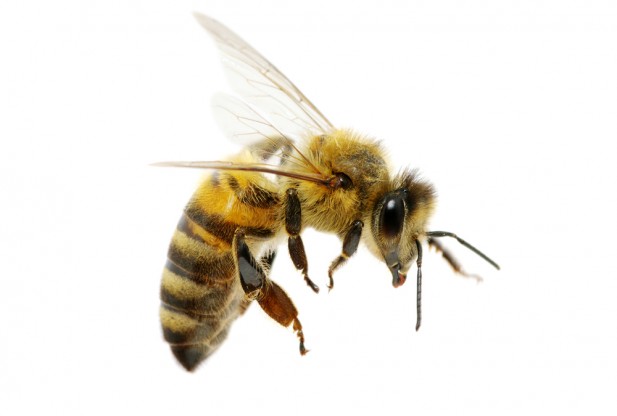
The Unwise Bee, A Brief Story by James E. Talmage

Sometimes I find myself under obligations of work requiring quiet and seclusion such as neither my comfortable office nor the cozy study at home insures. My favorite retreat is an upper room in the tower of a large building, well removed from the noise and confusion of the city streets. The room is somewhat difficult to access and relatively secure against human intrusion. Therein I have spent many peaceful hours with books and pen.

I am not always without visitors, however, especially in the summertime; for when I sit with the windows open, flying insects occasionally find entrance and share the place with me. These self-invited guests are not unwelcome, and many times I have laid down the pen and watched with interest the activities of these winged visitants with an afterthought that the time so spent had not been wasted. For is it not true that even a butterfly, a beetle, or a bee may be a bearer of lessons to the receptive student?

Once, a wild bee from the neighboring hills flew into the room. At intervals during an hour or more I listened to the pleasing hum of its flight. The little creature realized that it was a prisoner, yet all its efforts to find the exit through the partly opened window failed. 

When I was ready to close up the room and leave, however, I threw the window wide open and tried to guide and then to drive the bee to liberty and safety, knowing full well that if it was left in the room it would die just as other insects there entrapped had perished in the dry atmosphere of the enclosure. But the more I tried to drive the bee out, the more determinedly did it oppose and resist my efforts. Its erstwhile peaceful hum developed into an angry roar; its darting flight became hostile and threatening.

Then it caught me off my guard and stung my hand--the very hand that would have guided it to freedom--and finally alighted on a pendant attached to the ceiling, beyond my reach of either help or injury. The sharp pain of its unkind sting aroused in me rather pity than anger, for I knew the inevitable penalty of its mistaken opposition and defiance, and I had to leave the creature to its fate.

Three days later, I returned to the room. When I entered, I saw the dried, lifeless body of the bee on the writing table. It had paid for its stubbornness with its life.

To the bee's shortsightedness and misunderstanding I was a foe, a persistent persecutor, a mortal enemy bent on its destruction; while in truth I was its friend, offering it ransom of the life it had put in forfeit through its own error, striving to redeem it, in spite of itself, from the prison house of death and restore it to the outer air of liberty.

Are we so much wiser than the bee that no analogy lies between its unwise course and our own lives?

[Slightly adapted from James E. Talmage, "The Unwise Bee."]


I found this image on The Culinary Exchange:
http://www.theculinaryexchange.com/blog/how-the-bee-will-determine-the-future-of-the-food-ecosystem/#.VeOSS_lViko

Friday, August 28, 2015

A Brief Summary of the Antidosis of Isocrates

In this fictional defense speech, Isocrates pattern what he says after Socrates’ own defense speech when he, Socrates, was accused of corrupting the youth.
The following notes will, unfortunately, read more like a bulleted list than a discussion of Isocrates’ ideas. Nevertheless, the ideas are cool, and the list is, I think, worth reading.

Though I think I prefer Norlin's translation in the Loeb edition the quotations found below come from the text found in Isocrates I on pages 205-264 of Mirhady and Too's translation.

I think that’s Isocrates’ main argument is this: a rhetorical education—an education about words and using them well—will bind communities together, help people reason effectively, and give people the faculty to judge intelligently because what comes out of a person is evidence of what is inside him or her.

Here are a few specific points Isocrates makes (and here comes the bulleted list):

  • Speech is an image of a person’s thought (207).
  • Speech is synecdoche for character (216). It reflects who we are on the inside. Isocrates quotes his own previous speeches so people can read them and see for themselves what kind of a person he has been in the past. By reading those speeches, people can get an idea of his character.
  • We’re similar to those with whom we associate (223). They influence us and we influence them.
  • Philosophy is supposed to be a good thing, though it’s been “unjustly slandered” (237). We should seek the truth, but also judge nothing without discussion (238) because we need one another to discover truth.
  • Since older generations hand down practices to younger generations, the education of youth is of prime importance. Philosophy is for the soul what exercise is for the body (239). We need both, and the two disciplines are not totally separated, since the body influences the mind and the mind the body.
  • A speaker doesn’t need full knowledge (episteme), but doxa (240). [Is full knowledge for mortals even possible, I wonder?]
  • Students must obey teachers (241) because teachers are trying to help students to learn.
  • Nature and innate ability are both important, and so is practice. Nature can be and is improved by practice.
  • We need an education of what it means to be human (244).
  • We do what we desire. Often, we desire pleasure, profit, or honor (245).
  • The best speakers are responsible for most good. The best leaders pay more attention to logoi than other things (248). So, the power of speech doesn’t make people into criminals (249). (Only the misuse of the powers of speech does.) We teach our students the same things that we do and are. (This me of James Berlin's "Rhetoric and Ideology in the Writing Class" in College English 50(5):477-494.)
  • The power to speak is the power to judge. Speaking well involves judging well. Speech is responsible for all our inventions (251). Speaking well is a clear sign of a good mind. True speech is the image (eidolon) of “a good and faithful soul” (252 this is also on 207, but the Greek says eikon instead of eidolon).
  • We use the same arguments on others that we use on ourselves.
  • Speech “is the leader of all thoughts and actions” (252).
  • What some people call philosophy isn’t philosophy (254). Those who are wise (sophoi) “are those who have the ability to reach the best opinions (doxai) most of the time” while philosophers are those who gain that wisdom as quickly as possible.
  • Speaking well is thinking intelligently (255). The more a person wants to persuade the more that person will strive for virtue: since the capacity to be a good person involves the capacity to do the right thing at the right time, and since speech is a subset of action, a good person who can speak well will say the right thing at the right time.

Thursday, August 27, 2015

On Theology and Logogy, A Brief Summary of Chapter 20 from On Symbols and Society

20.From The Rhetoric of Religion, 1-3, 183-196.

Kenneth Burke's The Rhetoric of Religion: Studies in Logology has many statements in it worth pondering. The book seems more profound each time I read it. The excerpt from Gusfield’s On Symbols and Society only covers pages 1-3 and 183-196, so this brief summary will only provide 3 very short paragraphs from Burke's book.

Introduction: On Theology and Logology
Theology is words about God (theos + logos). Logology, then, would be words about words (logos + logos). Statements theologians have made about God can be used metaphorically to talk about words, whether people believe in God or not. And it is also possible to thereby analyze statements about God as if they spoke about reason and language (logos). God-terms are summarizing words because they function as combining all into one.

Tautological Cycle of Terms for “Order”
The term order applies to nature and political “un-nature,” socio-political “order.” But might the terms in socio-political order become used in nature?
“Order” is how things are organized. But if “order” is a command, then other terms such as “obey” and “obedience” are implied. If things are innocent, then they cannot just “obey,” however. They may also “disobey” “order.”

The religious principles of faith and obedience are thus grounded in language (187). Things move. People act. Acting brings responsibility. Implicit in the idea of an act is free will. Pride is the attitude which results in disobedience. Humility is the attitude which leads to obedience. 

Sunday, August 16, 2015

Thoughts from A Sunday Afternoon Visit to a Small Memorial Park

When people ask me how many siblings I have, I usually say we are five: I have 2 older sisters, a younger sister, and a younger brother. But this last weekend I went with Ryan, my younger brother, his wife Ju, and my mom to visit the graves of two older sisters that I never met because they died before I was even born. Here are pictures of the stones:


And as we stood there looking at the graves, a few lines of William Wordsworth's 1798 poem came to mind:

"But they are dead; those two are dead!
Their spirits are in heaven!"
'Twas throwing words away; for still
The little Maid would have her will,
And said, "Nay, we are seven!"

Book Review: The Rhetoric of American Civil Religion

I've recently received word from Taylor & Frances Online that a book review I wrote was published in the Journal of Religious and Th...